What Is Takoyaki, What Goes in It, and Where to Eat It: Osaka's Best 3, Picked by a 30-Year Local
Takoyaki explained: the dashi-and-egg batter, the octopus, the half-sphere pan, the toppings and the salt, ponzu and dashi versions. Then the three Osaka shops a team member who has lived here 30+ years would send you to, with verified hours and locations.
Batter, octopus, a hot pan with round holes, and a lot of local opinion. Here’s what’s actually in takoyaki, what Osaka people argue about, and the three shops a member of our team, an Osaka resident for more than 30 years, would send you to.
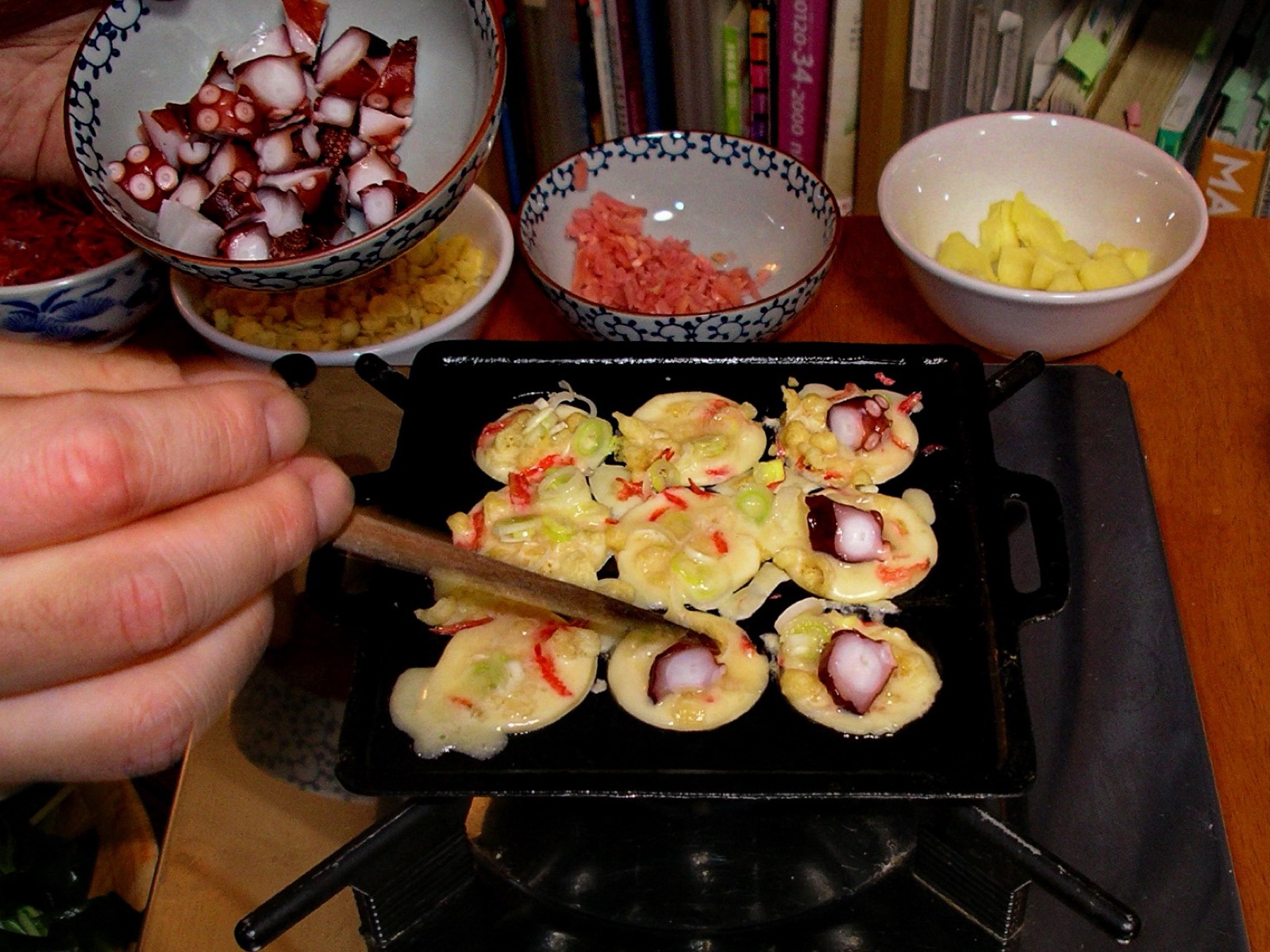

The 30-second answer:
- Takoyaki is a ball of very thin flour, dashi and egg batter with a piece of boiled octopus inside. It’s cooked in a pan of half-sphere moulds and turned with a pick until round. The standard finish is sauce, mayonnaise, aonori (green seaweed powder) and katsuobushi (bonito flakes).
- The local line on texture: good Osaka takoyaki is soft and molten inside, cooked on the griddle with only a little oil. A ball with a hard, crunchy shell from sitting in lots of oil is, to many Osaka people, “not takoyaki”. That’s an opinion, but a common one.
- Our three: Umaiya (near Tenjinbashisuji 6-chome, since 1953, eat it plain), Kougaryu (Amerikamura, since 1974, the sauce-and-mayo classic) and Wanaka (Sennichimae, Namba, order the salt). For takoyaki with beer late at night: Takotako King.
- Cost: a few hundred yen. Umaiya was ¥460 for 8 in February 2026, and Takotako King’s menu lists 8 large ones for ¥500.
- Eat it on the spot, and not in one bite. Break it open and let it steam. Takoyaki doesn’t survive the trip back to your hotel.
What is takoyaki, and what exactly goes in it?
Takoyaki is flour batter loosened with dashi and egg, poured into the round hollows of a hot iron plate, with chopped octopus inside. That’s essentially the definition on the agriculture ministry’s (MAFF) regional food page for Osaka, which also calls it Osaka’s soul food.
The batter is much runnier than visitors expect. MAFF’s recipe for four people uses 300 g of flour to 1,100 ml of dashi and three eggs. That’s nearly four times as much liquid as flour, which is why a good takoyaki is molten in the middle.
| Part | What it is | What it does |
|---|---|---|
| Batter | Wheat flour, dashi (stock, usually bonito-based), egg, a pinch of salt | The flavour. In a good shop you can taste the dashi without any sauce |
| Tako (octopus) | Boiled octopus, cut into chunks (MAFF says about 15 mm) | The chewy bite in the middle |
| Tenkasu | Crunchy bits of fried tempura batter | Adds richness and a little texture |
| Beni shoga | Red pickled ginger, chopped fine | A sharp, sour note |
| Negi | Green onion | Freshness. Many shops add it to the batter, and some offer it piled on top |
Not every shop uses all of the last three.
The pan is a heavy plate with rows of half-sphere hollows. MAFF describes an iron plate. Some shops have their own: Umaiya has its plates custom-made in copper for better heat conduction, according to a February 2026 interview with its owner on the Japanese property site LIFULL HOME’S. The cook fills the hollows to overflowing, drops in the fillings, then keeps turning each ball a quarter-turn at a time with a thin pick until the overflow has been tucked in and it’s round. A little oil goes on the plate. MAFF’s recipe heats it to 220°C.
The toppings: MAFF dates today’s style to after the Second World War, when thick sauce arrived. Since then the standard has been sauce, aonori and katsuobushi, served in a little boat-shaped tray (fune) with toothpicks. Mayonnaise is now standard too. The bonito flakes curl and move in the heat. That’s normal.
Salt, soy, ponzu and dashi: the other ways to order it
Sauce and mayo is the default, not the only option. Most specialist shops offer some of these:
- Shio (salt): the choice when you want to taste the batter. Wanaka says its kettle-made salt version lets you taste the batter and texture as they are.
- Shōyu (soy sauce): often dashi-flavoured soy. Kougaryu pairs bonito-infused soy with its mayo.
- Ponzu: citrus soy sauce, light and sharp, often with lots of green onion (negi-pon).
- In dashi: some shops serve takoyaki in warm broth. Wanaka’s wanko-dako is one, at three of its shops.
- Nothing at all: at Umaiya, the batter is the point.
Akashiyaki: the cousin you dip in dashi
Akashiyaki comes from Akashi in Hyogo Prefecture, west of Kobe. MAFF’s Akashiyaki page and its food-education pages for children give the differences:
- The batter is flour plus jinko (wheat starch), with more egg, so it comes out soft and fluffy rather than firm.
- It’s cooked on a copper plate.
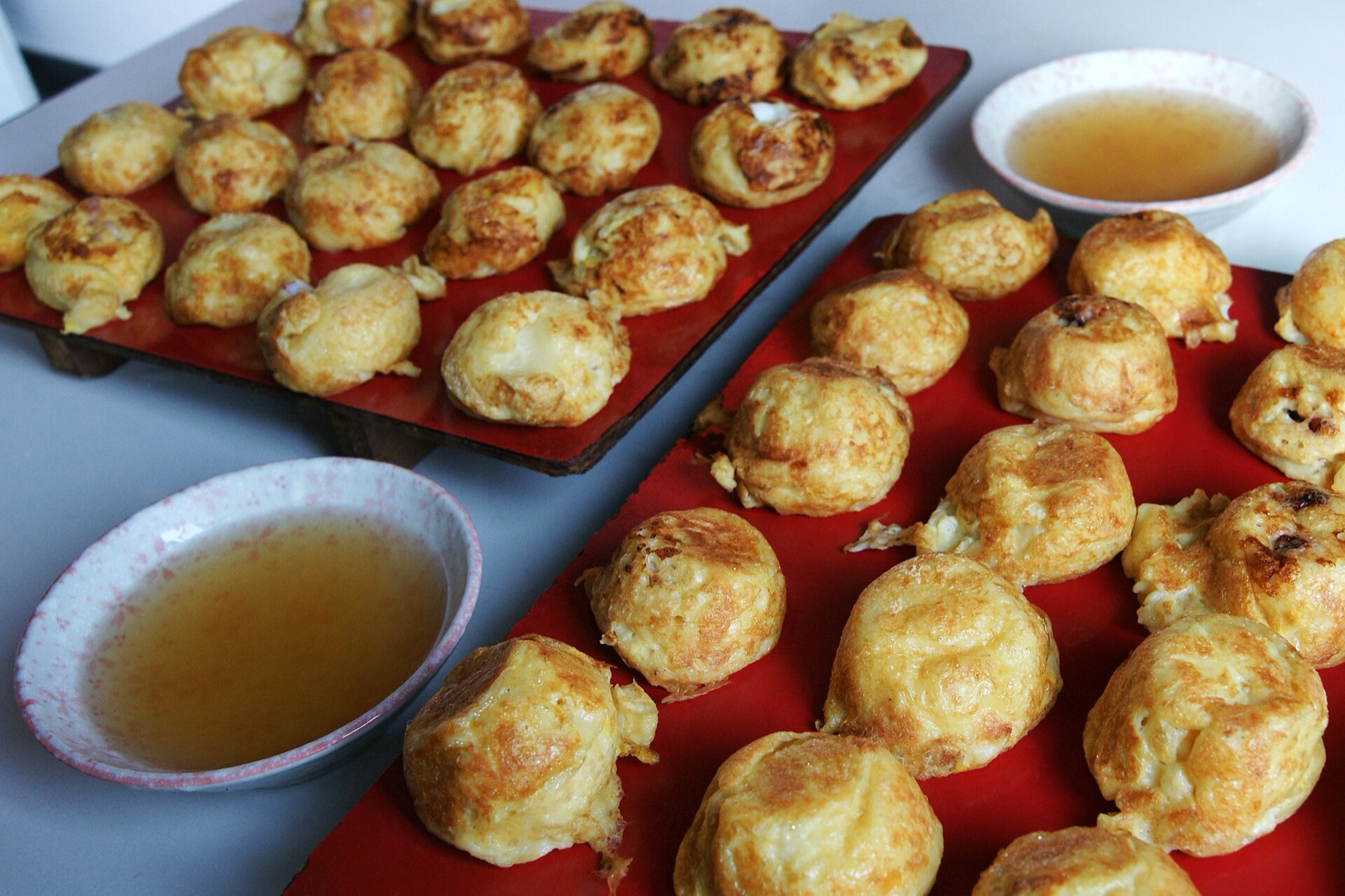
- It’s dipped in dashi instead of being topped with sauce. The dashi is usually warm, though MAFF notes it can be served chilled too.
- It’s served on a slightly tilted wooden board, not in a boat.
- People in Akashi call it tamagoyaki (“egg cooked”). The name “Akashiyaki” was coined around 1988, when a city official used it to promote the town.

Should takoyaki be crispy or soft? The local line
Our view, and a very common one in Osaka: real takoyaki is soft and molten, cooked on the griddle with only a little oil. If the outside crunches because the ball has basically been deep-fried in a lot of oil, many locals will tell you that isn’t takoyaki. It might be tasty, but it’s something else.
It’s an opinion, not a rule, and the line is finer than it sounds: even the shops below mention a bit of crispness. Umaiya’s owner aims for kari (crisp) outside and mochi (springy) inside. Wanaka’s site describes its takoyaki as crisp outside and melting inside. That’s a thin skin set by a hot plate, and it gives way the moment you bite.
What locals object to is different. That’s when the hollows are flooded with oil, the balls are effectively frying, and you get a hard shell that cracks like a fritter, with a firmer, set inside. You can often spot this style from the street: look for a pan glistening with pooled oil. If you like crunch, it’s easy to find. Just know it isn’t the takoyaki most Osaka people grew up making at home.
Osaka’s best 3 takoyaki, picked by a 30-year local
These are the owner’s own picks. The team member who chose them has lived in Osaka for more than 30 years. Not a survey of every stand in the city: just where we’d send a friend.
| Shop | Area | Style | What to order | Hours (check before you go) |
|---|---|---|---|---|
| Umaiya | Tenma / Tenjinbashisuji 6-chome | Old-school, dashi-rich, eaten plain | 8 pieces, no sauce | 11:30–18:30, closed Tue |
| Kougaryu (main shop) | Amerikamura, by Triangle Park | The sauce-and-mayo classic | Sauce-mayo | 10:30–20:30 (Sat & before holidays to 21:30) |
| Wanaka (Sennichimae main shop) | Namba | Crisp-skinned, molten, lots of flavours | Kettle-salt, or the mixed ōiri | Mon–Fri 10:30–21:00; Sat, Sun & holidays 9:30–21:00 |
| Takotako King (mention) | Higashi-Shinsaibashi / Amemura | Takoyaki bar with drinks | Large takoyaki and a beer | Evenings until 1:00–5:00, varies by shop |
1. Umaiya (Tenma): the old one you eat without sauce
- Where: 4-21 Naniwa-chō, Kita-ku, on the Tengo Nakazaki-dōri shopping street. Time Out puts it 2 minutes’ walk from Tenjinbashisuji 6-chōme Station (Tanimachi and Sakaisuji lines).
- Hours: 11:30–18:30, closed Tuesdays. This is a daytime stop, not a late-night one.
- Since: 1953. The owner interviewed in 2026 is the fourth generation.
- Style: small-hole copper plates and a bonito-dashi batter. Batter is added again partway through cooking. According to that interview, the octopus comes in as whole boiled octopus and is cut up by the owner, and the red ginger comes from a local pickle shop. The griddle is outside the shop.
- Price: ¥460 for 8 in the February 2026 interview.
- What to order: 8 pieces. Umaiya is known for takoyaki you eat as they come, so eat the first few plain before deciding you need anything else. This is the shop that shows you what the dashi in the batter is for.
2. Kougaryu, Amerikamura main shop: the sauce-and-mayo classic
- Where: 2-18-4 Nishi-Shinsaibashi, Chuo-ku, facing Triangle Park in Amerikamura. The nearest stations are Yotsubashi and Shinsaibashi. Our Shinsaibashi and Amerikamura guide has the exits.
- Hours: 10:30–20:30, and until 21:30 on Saturdays and the day before a public holiday, according to Kougaryu’s shop page. Another listing gives earlier closing on Sundays and holidays, so check if you’re going late.
- Since: 1974. It was listed as a Michelin Bib Gourmand three years running in the 2010s.
- Style: Kougaryu’s site describes a dashi batter with yam mixed in, a sweet sauce, and its own mayonnaise made with egg yolk to cut the acidity. It also calls itself the originator of the criss-cross mayonnaise drizzle you now see everywhere.
- What to order: the sauce-mayo, which the shop says hasn’t changed in 50 years. If you want something lighter, try the negi-pon (green onion and ponzu). There’s a small eating space. Its Hot Pepper listing says PayPay is accepted but not cards, so carry cash.
3. Wanaka, Sennichimae main shop: the one with the salt
- Where: 11-19 Namba Sennichimae, Chuo-ku, 5 minutes’ walk from Namba Station Exit 3 (Midosuji Line) or from Nankai Namba, per Wanaka’s shop page.
- Hours: Monday–Friday 10:30–21:00. Saturday, Sunday and holidays 9:30–21:00. It takes cash or PayPay.
- Since: 1986, when the current chairman started making takoyaki in front of the family sweet shop, on the spot where the main shop stands now.
- Style: cooked by experienced hands turning each ball with a single skewer, according to Wanaka. Its own description is crisp outside and melting inside. Flavours include sauce, kettle-made salt, dashi soy, spicy sauce and ponzu.
- What to order: the kama-daki shio (kettle-made salt), which Wanaka says lets you taste the batter and texture as they are. If you can’t decide, get the ōiri, a mixed serving of three popular flavours plus a limited-time one. For something to eat while walking, there’s the takosen: takoyaki sandwiched in Wanaka’s own prawn cracker.
- Price: Wanaka announced a price rise from 2 February 2026 and doesn’t list standard prices online. Read the board.
- Wanaka has a dozen shops, including Dotonbori, Kuromon Market, Shin-Osaka Station and in front of Osaka Castle, so there’s usually one near you.
Honourable mention: Takotako King, for takoyaki with drinks
For sitting down with a beer and takoyaki, okonomiyaki and yakisoba. Takotako King calls itself a takoyaki bar, and its five shops are in Higashi-Shinsaibashi, Amerikamura and Soemon-chō, open from the evening until the small hours.
- Main (Suō-machi) shop: 2-4-25 Higashi-Shinsaibashi, 19:00–3:00 (last order), 3 minutes’ walk from Nagahoribashi Station. The other branches open between 17:00 and 19:00, and closing times vary.
- Menu: large takoyaki, 8 for ¥500 on its menu page, with sauce, soy, salt or ponzu. Draft beer, chūhai and highballs are on the drinks menu.
- Paying: the main shop takes cash, PayPay, Visa and Mastercard.
It’s a sit-down drinking place, so as at any bar or izakaya, check the menu for a seat charge or an otoshi (the unordered small dish) before you settle in. Its site doesn’t mention one.
How do you eat takoyaki without burning yourself?
Don’t put a fresh one in your mouth whole. The outside cools quickly. The molten middle doesn’t.
- Use the pick to break one open, or bite it in half, and let the steam out for a minute.
- Eating standing up near the stand is completely normal. That’s what the boat and toothpicks are for.
- The bonito flakes moving on top are just the heat.
Our Osaka food guide has more on toppings, the green-onion version, and why nearly every Osaka home owns a takoyaki pan.
The honest truth about takoyaki in Osaka
Queues: the well-known shops, especially around Namba and Dotonbori, get lines at busy times. Takoyaki is everyday food here. A short wait is fine; half an hour isn’t, when Wanaka alone has several shops in Minami.
Takoyaki doesn’t travel. Steam trapped in the box makes the outside soggy, the inside sets as it cools, and reheating never brings it back. Eat it within a few minutes, near where it was made.
Mind the hours. Umaiya closes at 18:30 and on Tuesdays. If you want takoyaki after dinner, that’s Wanaka (until 21:00) or Takotako King (late).
Who should skip it: if soft, runny textures aren’t for you, the Osaka style won’t change your mind. Vegetarians: even without the octopus, the batter is usually made with fish-based dashi, and the flakes on top are bonito. Allergies: the batter contains wheat and egg, and mayonnaise contains egg.
The common mistake: popping a whole one straight off the griddle, then trying to look calm with your mouth open.
FAQ
What is takoyaki made of? A thin batter of wheat flour, dashi (Japanese stock) and egg, cooked in a pan of half-sphere moulds with a piece of boiled octopus inside each ball. Most shops also add tenkasu (crunchy tempura bits), red pickled ginger and green onion, and finish it with sauce, mayonnaise, aonori and katsuobushi.
What is the difference between takoyaki and Akashiyaki? Akashiyaki, from Akashi in Hyogo, is an egg-rich, softer cousin made with flour plus wheat starch (jinko). It’s served on a tilted wooden board and dipped in warm dashi instead of being topped with sauce. In Akashi itself it’s called tamagoyaki.
Where is the best takoyaki in Osaka? Our team member who has lived in Osaka for over 30 years picks three: Umaiya near Tenjinbashisuji 6-chome (since 1953, eaten plain), Kougaryu’s Amerikamura main shop (since 1974, the sauce-and-mayo classic) and Wanaka’s Sennichimae main shop in Namba (order the salt). For takoyaki with drinks at night, Takotako King.
Should takoyaki be crispy or soft? Many Osaka locals, including our team, think proper takoyaki is soft and molten inside, cooked on the griddle with only a little oil. A light griddle-set skin is normal, but a hard, crunchy shell from cooking in lots of oil is, to a lot of Osaka people, not really takoyaki. It’s a widely held opinion, not a rule.
How much does takoyaki cost in Osaka? Usually a few hundred yen a serving. Umaiya charged ¥460 for 8 in a February 2026 interview, and Takotako King’s menu lists 8 large takoyaki for ¥500. Wanaka raised its prices on 2 February 2026 and doesn’t publish them online, so check the board.
How do you eat takoyaki without burning your mouth? Don’t put a fresh one in whole. Break it open with the pick or bite it in half, let the steam out for a minute, then eat. The molten centre stays far hotter than the outside feels.
Shop hours, prices and locations checked against official and primary sources in October 2026. They change, so confirm before you go. Written by a Kansai-based team that includes people who run a restaurant in Osaka.