Autumn Leaves in Kansai 2026: When Kyoto, Nara and Osaka Peak, Week by Week, and How to Beat the Crowds
A week-by-week autumn leaves calendar for Kyoto, Nara and Osaka in 2026, built on this year's official forecasts (they're forecasts, not promises). Includes Tofukuji, Eikando and Arashiyama fees, hours and night illuminations, Nara Park and Shorakuji, Minoo Falls, Osaka Castle, Midosuji and Expo '70 Park, plus how to avoid the worst of the crowds.
Mountains turn first, cities last, and most of Kyoto’s famous maples won’t be at their best until late November. This is what the 2026 forecasts say and how to use them.

The 30-second answer:
- The 2026 forecasts point to a slightly late season. Japan Weather Association forecasts Arashiyama from about 13 November and Weathernews from about 24 November. Plan for the last ten days of November in Kyoto, Nara and Osaka.
- Higher ground goes first. In a typical year, Arima and Kibune colour from early November, the city temples peak from mid-November into early December, and city ginkgo and maples finish in early December.
- Kyoto classics: Tofukuji’s bridge costs ¥1,000 (14 Nov–6 Dec). Eikando costs ¥1,500 by day and ¥1,000 for its night illumination. Neither listed advance booking for general entry.
- From Osaka without going to Kyoto: Minoo Falls (a 2.8 km river walk), Osaka Castle Park, the Midosuji ginkgo and Expo ‘70 Park. Nara is about 40 minutes from Namba.
- To beat the crowds, go on a weekday at opening time, and take the train. Avoid 21–23 November, a three-day holiday weekend right in the forecast peak.
What do the official 2026 forecasts say?
They agree the season will be a bit late, but not on the exact date. Three forecasters had published by 2 October 2026:
| Forecaster (date issued) | What it says for Kansai |
|---|---|
| Japan Weather Association / tenki.jp (1st forecast, 1 Oct) | Colours slightly late across western Japan, including Kinki, with peak around normal or later. Arashiyama: from about 13 November, about the same as last year. Temperatures expected to stay above normal through November. |
| Weathernews (1st forecast, 3 Sep) | Later than normal or slightly later across most of Japan. Arashiyama: from about 24 November. Its Arashiyama spot page showed about 25 November on 2 October. |
| Japan Meteorological Corporation (2nd forecast, 1 Oct) | The date when most leaves on the official observation tree have turned, which isn’t quite the same as peak: Osaka ginkgo 24 Nov, Kyoto ginkgo 27 Nov, Osaka maple 4 Dec, Kyoto maple 11 Dec, all within about a week of normal. |
These are forecasts, and they’ll be revised. An 11-day gap for the same valley shows how uncertain they still are. Arashiyama’s typical peak lasts a couple of weeks, though, so both forecasts point at the second half of November.
When does each Kansai spot peak? A week-by-week calendar
Higher ground turns first and city streets last. The table combines this year’s forecasts with each spot’s typical peak range, as published by tenki.jp, Weathernews and the venues themselves. In a warm year, assume the later end of each range.
| Week (2026) | What’s likely at its best | Basis |
|---|---|---|
| Mid–late Oct | Odaigahara (mountains of southern Nara). Cherry trees in Osaka Castle Park, the first there to turn red. | Typical ranges |
| 2–8 Nov | Arima Onsen’s Zuihoji Park (early–mid Nov). Kibune, north Kyoto, starts. Expo ‘70 Park’s maple valley and Shorakuji in Nara begin. | Typical ranges |
| 9–15 Nov | tenki.jp’s forecast start for Arashiyama (13 Nov). Eikando’s autumn season opens 11 Nov, Tofukuji’s 14 Nov. Expect partial colour in city temples. | 2026 forecast + temple dates |
| 16–22 Nov | Kyoto temples filling in. Minoo, Nara Park and Osaka Castle Park maples enter their typical range. Eikando’s night illumination starts 20 Nov. | Typical ranges + 2026 dates |
| 23–29 Nov | Probably the best week overall. Weathernews’ Arashiyama forecast (24 Nov), Osaka ginkgo (24 Nov), Kyoto ginkgo (27 Nov). Midosuji should be gold. | 2026 forecasts |
| 30 Nov–6 Dec | City maples: Osaka maple forecast 4 Dec. Kiyomizu-dera and Arashiyama typically run into early December. Tofukuji, Eikando and Hogon-in special seasons end 6 Dec. | 2026 forecast + typical ranges |
| 7–13 Dec | The tail: Kyoto maple forecast 11 Dec. Expect fallen-leaf carpets (chiri-momiji) rather than full trees. | 2026 forecast |
Flying in for November? Our KIX-to-Osaka guide compares the trains and buses from the airport.
Kyoto: what do the classics cost, and when are they open?
Tofukuji, Eikando and Arashiyama are famous for good reason, and all three are crowded at peak. These details come from each temple’s own site for autumn 2026:
| Tofukuji | Eikando (Zenrinji) | Arashiyama: Tenryu-ji / Hogon-in | |
|---|---|---|---|
| Autumn season | 14 Nov–6 Dec | Day 11 Nov–6 Dec; night 20 Nov–6 Dec | Hogon-in autumn opening 3 Oct–6 Dec |
| Hours | Tsutenkyo bridge from 8:30, gardens from 9:00, close 16:30 | Day: last entry 16:00 (gates close 17:00). Night: entry 17:30–20:30 (closes 21:00) | Tenryu-ji 8:30–17:00 (last entry 16:50); garden from 7:30 on 14–30 Nov. Hogon-in day 9:00–17:00 |
| Adult fee | Tsutenkyo & Kaisando ¥1,000; Hojo garden ¥600; no combined ticket in autumn | Day ¥1,500; night ¥1,000 (junior high and up) | Tenryu-ji garden ¥500 (+¥300 for halls); Hogon-in ¥700 (day) |
| Night illumination | None listed | Yes, separate ticket | Hogon-in, separate ticket |
| Nearest train | JR or Keihan Tofukuji, about 10 min walk (JR is 3 min from Kyoto Station) | Subway Keage, about 15 min walk | Randen Arashiyama (Tenryu-ji is right there); JR Saga-Arashiyama, 13 min walk |
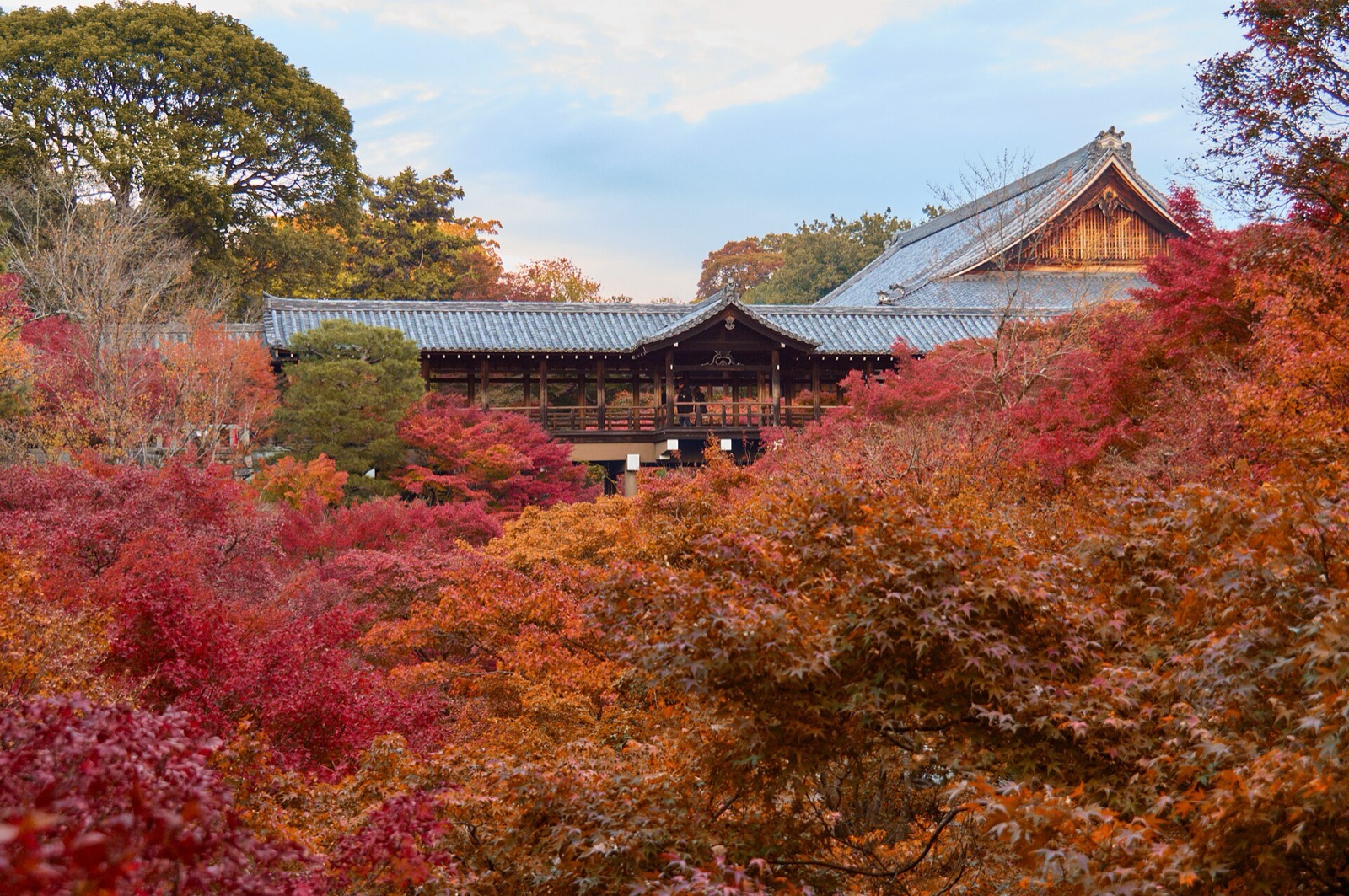
Tofukuji is the temple in the photo above. Its visitor guide warns that when it’s crowded you may be asked not to take photos on the Tsutenkyo and Gaunkyo bridges, so that people keep moving. The car park is closed from 25 October to 10 December.
Eikando has a pond garden and pagoda on a hillside. Its visiting page says the day exhibition and the night illumination are separate sessions. You can’t stay on from one into the other, so if you want both you pay twice.
Arashiyama is a whole district. Tenryu-ji normally opens at 8:30, but from 14 to 30 November 2026 its garden opens early at 7:30 (garden entrance only, normal garden fee), which makes it the obvious first stop. Its sub-temple Hogon-in opens specially in autumn and also has an evening session. Day and night are separate, so a day ticket won’t get you into the night viewing. Check the temple’s site for night times and fees.
What the crowds are like: expect ticket queues and slow shuffling at the famous viewpoints, and Tofukuji’s bridge is the classic bottleneck. Some smaller Kyoto temples switch to reservation-only entry in peak weeks. If somewhere you’ve seen on social media looks small and private, check its own site before you go.
Nara: Nara Park, Shorakuji and getting there from Osaka
Nara Park is the easy, free option. Shorakuji is quieter but harder to reach. Either makes a good half day from Osaka.
Getting there: according to the Nara City Tourism Association, Kintetsu trains run from Osaka-Namba to Kintetsu-Nara in about 40 minutes direct, and JR’s Yamatoji Rapid from Osaka Station takes about 50 minutes. The regular Kintetsu fare is ¥680, and limited expresses add a ¥520 charge. Kintetsu-Nara is the closer station to the park.
Nara Park mixes maples, ginkgo and cherry trees around Todai-ji, Kasuga and the deer lawns. Typical ranges run from late October (tenki.jp) or mid-November (Weathernews) into early December, so with so many species, something is usually turning. It’s a free, open park with no ticket gate, so go early.
Shorakuji, in the hills on the south-east edge of Nara city, has more than 3,000 maples, according to the temple. Its autumn special opening runs from 3 November to 6 December 2026. The Nara City Tourism Association lists the adult fee as ¥800 during the special opening (¥500 otherwise), with hours of 9:00–16:00 and a 17:00 gate closing in the autumn season.
Getting there is the catch. Regular buses stopped in 2015. The temple says a direct temporary bus runs from JR and Kintetsu Nara stations in leaf season (planned for mid-November to early December). The 2026 timetable hadn’t been published when we checked on 2 October. Otherwise, it’s about 25 minutes by taxi from Nara Station.
Osaka: autumn leaves without leaving the city
You can see proper autumn colour without fighting Kyoto’s crowds. Here are four options, from most nature to most city.

| Spot | What you get | Cost | Typical peak | Suits |
|---|---|---|---|---|
| Minoo Falls | River trail through maple woods to a 33 m waterfall | Free | Mid-Nov–early Dec | Walkers |
| Osaka Castle Park | Cherry, maples, then ginkgo around the castle | Park free; Nishinomaru Garden ¥200 | Late Oct (cherry) to early Dec (ginkgo) | Combining with the castle |
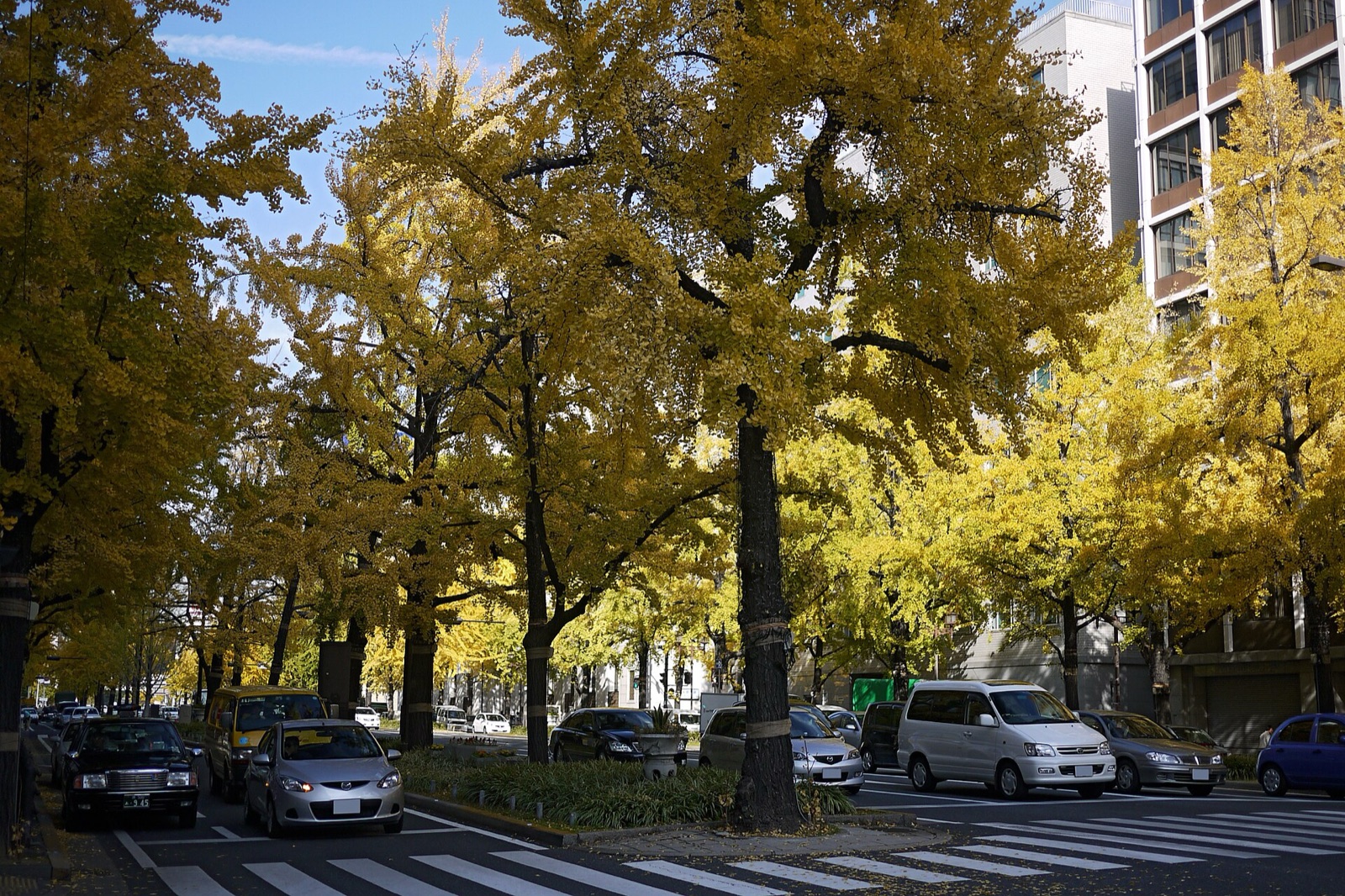
| Midosuji | 4 km avenue of ginkgo, lit up from 3 Nov | Free | Forecast ~24 Nov | An evening stroll |
| Expo ‘70 Park | Maple valley with a waterfall, plus a Japanese garden | ¥450 adults; children free | Early–late Nov | Families, space |
Minoo Falls. According to Minoo Park, the riverside Takimichi path runs about 2.8 km from Hankyu Minoo Station to the falls, about 40 minutes on foot. From Osaka-umeda, take the Hankyu Takarazuka Line and change at Ishibashi-handai-mae for the short Minoo Line. It’s a maintained path, not a mountain hike. Allow the same time for the walk back, and go early at weekends, because locals love it too.
Osaka Castle Park. The park’s leaf map gives maples a typical peak of mid to late November and ginkgo late November to early December. The Nishinomaru Garden, which looks across at the castle, is open 9:00–16:30 from November and closed on Mondays.
Midosuji. From 3 November to 31 December 2026, the City of Osaka lights about 4 km of the avenue from about 17:00 until 1:00. In the last week of November you may get gold leaves and lights on the same evening. Our Shinsaibashi guide covers that stretch.
Expo ‘70 Commemorative Park is reached by the Osaka Monorail to Banpaku-kinen-koen. Children of junior-high age and under get in free. It’s open 9:30–17:00 (last entry 16:30). It normally closes on Wednesdays, but it’s open every day in October and November.
How do you beat the crowds?
When and how you travel matters more than where you go.
- Go on a weekday. In 2026, 21–23 November is a three-day weekend (Labour Thanksgiving Day falls on Monday 23 November), so expect the busiest days of the season.
- Be there at opening. Tofukuji’s bridge opens at 8:30, and Tenryu-ji’s garden opens at 7:30 from 14 to 30 November. Do the temples in the morning and save the city and shopping for the afternoon.
- Take the train, not the city bus. At peak, Kyoto’s buses sit in traffic and the queues at Kyoto Station’s bus stops are long. Tofukuji, Eikando and Arashiyama all have rail stations within walking distance.
- Check the crowd forecast. Kyoto City’s official comfort map forecasts crowd levels by time of day, with live cameras for areas such as Arashiyama and Kiyomizu. We could only find it in Japanese.
- Have an Osaka or Nara backup. If Kyoto looks impossible on a Saturday, Minoo or Expo ‘70 Park is a calmer way to spend the day.
- Eat off-peak. Speaking as restaurant people: everyone near a famous spot wants lunch between 12:00 and 13:00. Eat at 11:00 or after 14:00.
The honest truth: what can go wrong
Kyoto at a weekend in late November is crowded, and it isn’t for everyone. If crowds ruin your day, skip the big three at weekends and do Nara, Minoo or an early weekday start instead.
The weather moves the peak, and forecasts can be wrong. This year’s forecasters are already 11 days apart on Arashiyama. A warm spell pushes colour later, and a storm can strip the trees early. Don’t pin a once-in-a-lifetime trip on one date. Cover the last ten days of November if you can, and check live leaf reports a few days ahead.
“Peak” is patchy. Even at peak, one slope can be red while the next is still green. The photos you’ve seen online were taken at the best moment from the best angle.
The common mistakes:
- Arriving at Tofukuji or Arashiyama at midday on a Saturday.
- Expecting to go straight from Eikando’s day session into the night illumination. They’re separate tickets.
- Relying on buses between Kyoto temples at peak.
- Booking Kyoto accommodation late. If rooms are scarce, stay in Osaka. Our Osaka hotel guide explains why Umeda is the easiest base for Kyoto day trips.
Who should skip it: anyone here only in early November who hopes to see Kyoto at its reddest. In a warm year like this one, early November is more likely to bring colour at higher spots like Arima and Kibune than in the city.
FAQ
When is peak autumn leaves season in Kyoto in 2026? Probably the second half of November. Japan Weather Association (tenki.jp) forecasts Arashiyama from about 13 November and Weathernews from about 24 November, and both expect a season around normal or later than normal because of a warm autumn. If you can only pick one week, aim for roughly 20–30 November and check the updated forecasts in late October.
Do I need to book Tofukuji or Eikando in advance for autumn 2026? Neither temple’s own site listed a booking requirement for general entry when we checked in October 2026. Tofukuji charges ¥1,000 for the Tsutenkyo bridge from 14 November to 6 December. Eikando charges ¥1,500 for daytime entry from 11 November and ¥1,000 for its separate night illumination from 20 November to 6 December.
Where can I see autumn leaves in Osaka without going to Kyoto? Minoo Falls is the best nature walk: about 2.8 km (around 40 minutes) on foot from Hankyu Minoo Station along a river trail. In the city, Osaka Castle Park, the ginkgo trees on Midosuji (forecast for around 24 November) and Expo ‘70 Commemorative Park, whose maple valley usually peaks in early to late November, are all easy by train.
How do I avoid the crowds at Kyoto’s autumn leaves spots? Go on a weekday, arrive at opening time (Tofukuji’s bridge opens at 8:30 and Tenryu-ji’s garden at 7:30 from 14 to 30 November), take trains rather than city buses, and avoid the 21–23 November three-day holiday weekend. Kyoto’s official comfort map forecasts crowd levels by time of day for areas like Arashiyama.
How do I get from Osaka to Nara to see the autumn leaves? Take the Kintetsu line from Osaka-Namba to Kintetsu-Nara: about 40 minutes direct, ¥680 on regular trains. JR’s Yamatoji Rapid from Osaka Station takes about 50 minutes. Kintetsu-Nara is the closer station to Nara Park, which is free.
Are the autumn leaves forecasts reliable? They’re a good guide, not a guarantee. This year’s forecasters are about 11 days apart on Arashiyama, and a warm spell can push the peak later. Treat early-season dates as a planning range, and check updated forecasts and live leaf reports a few days before you go.
Forecasts, dates, fees and hours checked against official sources (Japan Weather Association/tenki.jp, Weathernews, Japan Meteorological Corporation, the temples’ own sites, Nara City Tourism Association, Minoo Park, Osaka Castle Park, Expo ‘70 Commemorative Park and the City of Osaka) in October 2026. Forecasts will be revised and fees change, so confirm before you travel. Written by a Kansai-based team who live here.