# Japan Tax-Free Shopping from 1 November 2026: How the New Refund System Works (and How Not to Lose Your Refund)
> From 1 November 2026 you pay consumption tax at the till and get it back only after a customs check at the airport, before you check your bags. Here is what changes, what to do at the shop and at KIX, and the mistakes that cost you the refund.
Source: https://ninjapan.vercel.app/articles/japan-tax-free-shopping-refund-2026/ (published 2026-10-02, by ninjapan — a Kansai-based team living in Osaka)
*Japan's tax-free shopping switches to a pay-now, refund-later system on 1 November 2026. The money is the same; the place you can lose it has moved to the airport.*
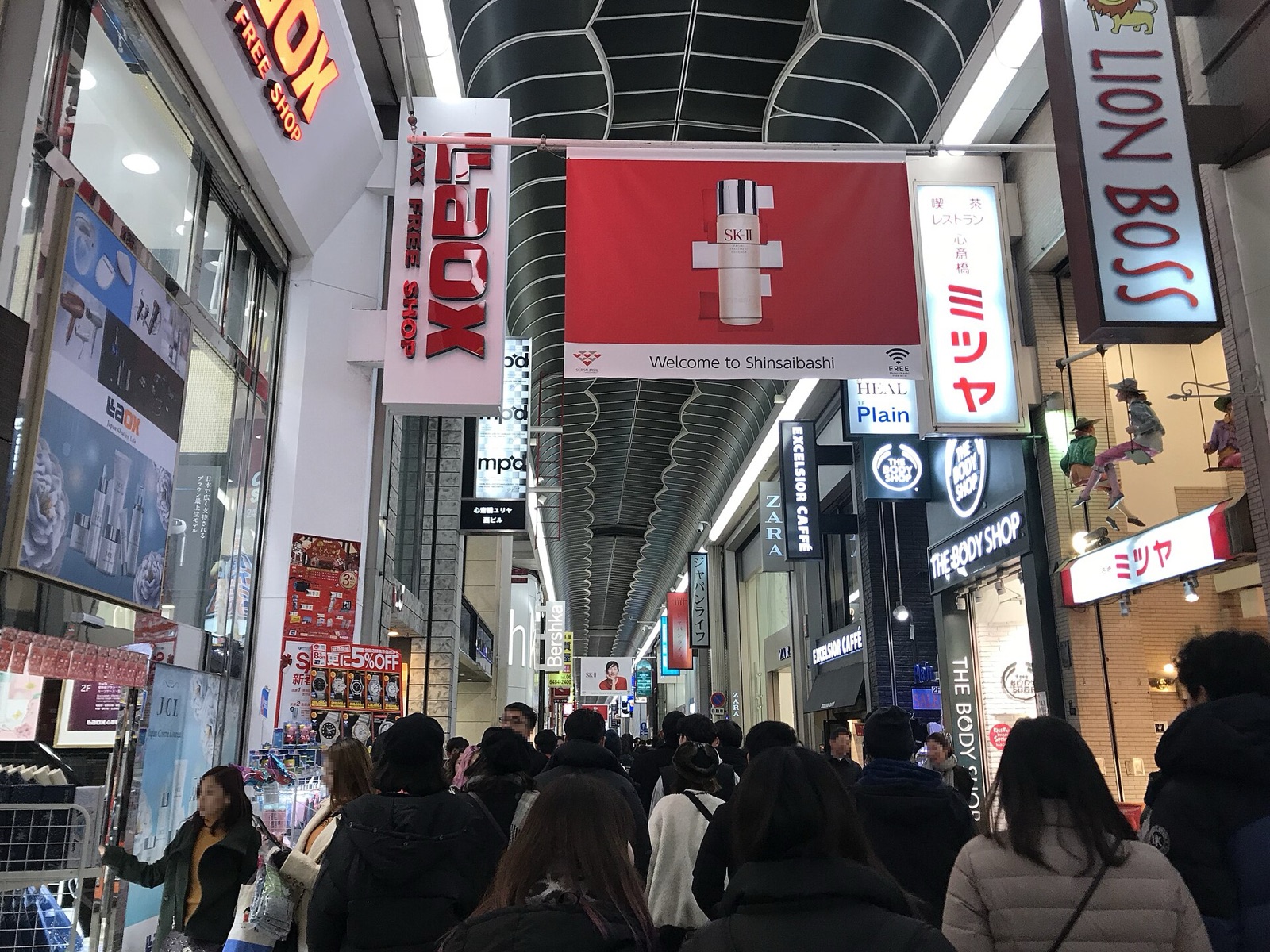
Shinsaibashi-suji, Osaka. The "Tax Free" signs stay; what happens at the till changes on 1 November 2026. Photo: そらみみ / CC BY-SA 4.0
**The 30-second answer:**
- **From Sunday 1 November 2026, you pay the tax at the till.** Tax-free shops charge the full price including consumption tax (10% on most goods, 8% on food and non-alcoholic drinks). You still show your passport, and you set up how you want the refund paid.
- **You get the tax back after a customs check when you leave Japan.** You scan your passport at a customs terminal in the airport's **departure lobby, before you check your bags**. Green means you're done. Red means customs wants to see the goods.
- **The deadline is 90 days from purchase.** It used to be shorter.
- **Minimum spend is still ¥5,000 before tax per shop per day.** But food, cosmetics and clothes now all count together, the ¥500,000 cap on consumables is gone, and there are no more sealed bags.
- **Two ways to lose the refund:** checking your suitcase before you do the customs step, or arriving at customs without every item on a receipt. That includes the box of snacks you opened on the train.
- **No grace period.** The new system applies to anything bought from 1 November, whenever you fly. Anything bought up to 31 October follows the old rules.
---
## What exactly changes on 1 November 2026?
The tax is no longer removed at the till. It's refunded after customs confirms the goods have left Japan. The Japan Tourism Agency's [official traveller leaflet](https://www.mlit.go.jp/kankocho/tax-free/content/001991247.pdf) puts it in three lines:
| | Until 31 October 2026 | From 1 November 2026 |
|---|---|---|
| At the shop | You pay the tax-free price | You pay **including** tax and register a refund method |
| At departure | Customs check **after** security | Customs check **before** security, in the public departure lobby |
| Refund | Nothing to refund | Paid by the shop or its refund operator **after** the customs check |
According to the National Tax Agency's [Q&A on the refund system](https://www.nta.go.jp/publication/pamph/shohi/menzei/201805/format/002.htm), the date that counts is when you **buy**, not when you fly. There's no period where shops can choose between the old and new methods.
Some things don't change. You still need to be a visitor, which in practice means a foreign national in Japan on temporary-visitor status (the normal tourist entry), not a resident. You still show your passport at the shop, or the Visit Japan Web QR code that carries your passport details. And you still need to hit ¥5,000 before tax in one shop on one day.
## What do I do at the shop?
Pay the full price, show your passport, and **ask the staff how the refund will be paid**. The national rules deliberately don't specify the refund method. The Tax Agency's Q&A lists examples such as bank transfer, refund to a credit card, payment through an app, or cash at the departure airport after the customs check. Each shop, or the refund company it uses, decides. The traveller leaflet just says the steps "will be explained to you at the tax-free stores you visit. Please be sure to ask when purchasing."
Questions worth asking at the counter, because the answers vary by shop:
- **How will I be refunded:** card, app, cash at the airport, or something else?
- **When will the money arrive?**
- **Is anything deducted?** The rules don't say who covers the cost of processing refunds, so check whether you'll get the full tax amount back.
Hit the ¥5,000 threshold in one go if you can. The rule is per shop, per day, before tax: ¥5,000 of 10%-rated goods is ¥5,500 at the till, and ¥5,000 of 8%-rated food is ¥5,400. From November, a ¥3,000 skincare set and a ¥2,000 T-shirt from the same shop on the same day add up, because the general-goods/consumables split is abolished.
**Keep each receipt's items together and in their original boxes.** The Tax Agency's Q&A warns that if you throw away packaging showing the model number, or separate items from their boxes, customs may not be able to identify them.
## What do I do at the airport?
**Do the customs step first, before you check in.** The official order on the leaflet is: tax-free terminal, then airline check-in counter, then security. The Tax Agency's [English notice](https://www.nta.go.jp/publication/pamph/shohi/menzei/201805/pdf/caution_en.pdf) is blunt about it: customs confirmation "cannot be completed after you have checked your hand luggage" (it means your checked bags), so do it in the departure lobby "allowing sufficient time."
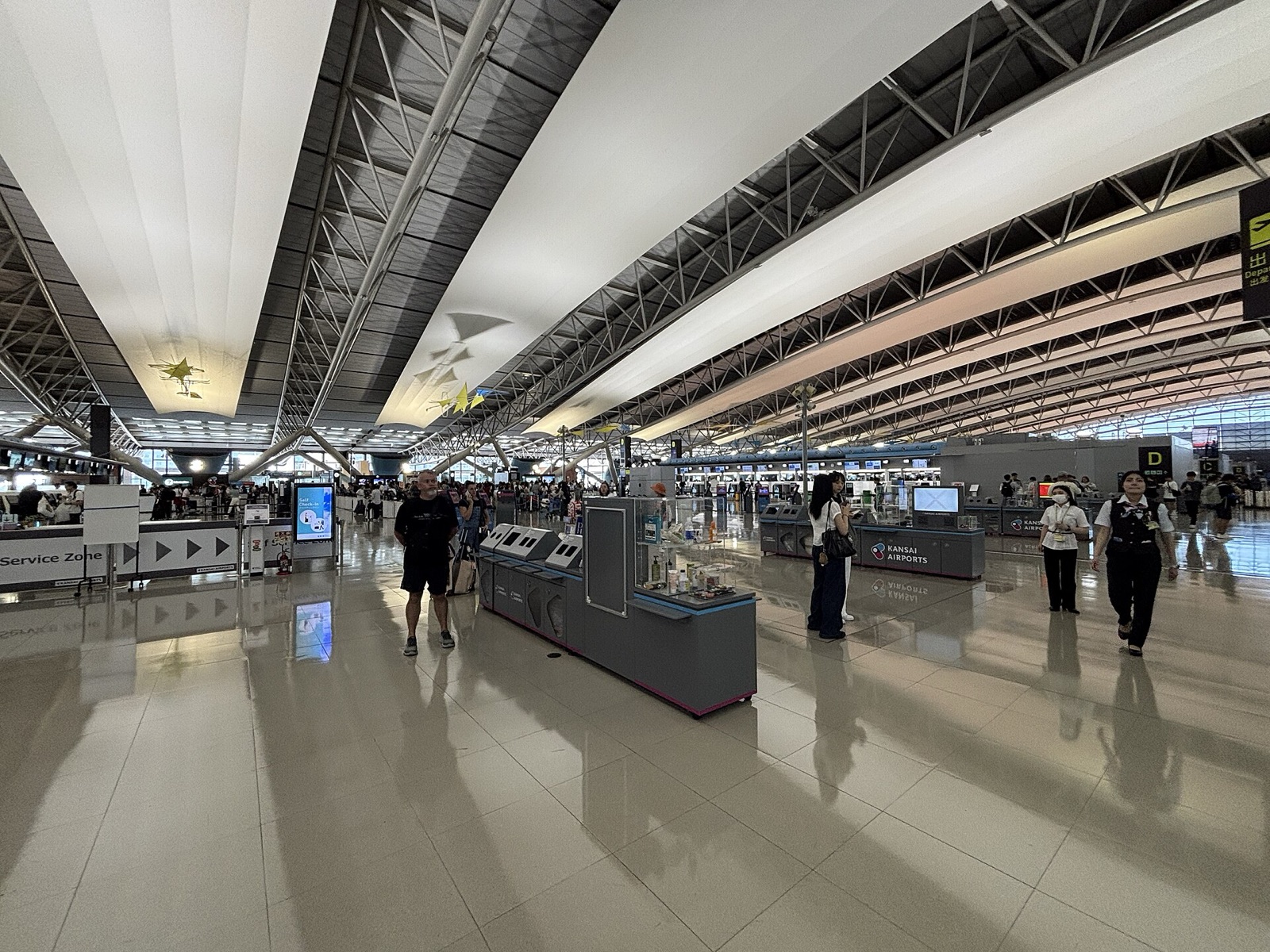
KIX Terminal 1's departure hall, the landside area where the new customs step happens, before you queue at your airline's counter. Photo: Fotointheworld / CC BY 4.0
Step by step:
1. **Arrive earlier than you normally would.** Everything below has to happen before your airline's check-in closes. The Tax Agency's Q&A says that if you abandon an inspection because you're running out of time, you haven't received customs confirmation and there's no refund.
2. **Find the tax-free procedure terminal** in the international departure lobby, with all your purchases still on you, not in a checked suitcase.
3. **Scan your passport.** The screen shows **green** (no inspection, you're done) or **red** (go to the customs inspection point and show the goods).
4. **Check in and go through security as normal.** Once you're cleared, you can check the purchases into the hold.
5. **The refund arrives** by whatever method you set up at the shop.
**The Visit Japan Web shortcut.** According to the Japan Tourism Agency's leaflet, at seven airports, including **Kansai (KIX)**, you can do the customs step on your phone through Visit Japan Web instead of queueing at a terminal. The others are Narita, Haneda, Chubu, New Chitose, Fukuoka and Naha. It only works in designated parts of the international departure lobby, on a dedicated Wi-Fi network, before security. You still need the goods with you, and it's still before check-in.
**Flying out via another Japanese airport?** If you take a domestic flight to connect to your international one, the customs step happens at the airport you **leave Japan from**, not where you start. Osaka's Itami airport is domestic-only (the [airport-name trap explained here](/articles/osaka-where-to-stay/)), so if you go Itami → Haneda → abroad, you do it at Haneda.
## What about things I bought before 1 November?
They stay under the old system. You already paid no tax at the till, so there's nothing to refund. Under the old rules, consumables like cosmetics and food came in special sealed packaging that you weren't supposed to open in Japan, and the leaflet shows the old customs check taking place after security.
If your trip spans the changeover, you could have both kinds of purchase. Keep the October receipts separate from the November ones, keep the old sealed bags sealed, and follow the instructions the shop gave you with each purchase.
## Food, cosmetics and medicine: the receipt trap
This is the change most likely to cost you money, especially if your shopping list is mostly snacks, sweets and skincare.
The sealed bags are gone, which sounds like freedom. But the official FAQ is clear: **if you use or consume food, drink, cosmetics or medicine in Japan, you won't get a refund on them.** And customs checks **per receipt**. The leaflet's example is a receipt for three items where one is missing: the refund is refused for **all three**, not just the missing one.
So a ¥91,000 receipt can lose its refund because of a ¥3,000 box of biscuits you opened in the hotel.
How to avoid that:
- **Buy what you'll eat or use on the trip on a separate receipt,** or don't put it through tax-free at all.
- **Don't open anything on a tax-free receipt** until you're out of Japan, even though nobody has sealed it.
- **If you've already used something,** the Tax Agency says not to use the terminal for that purchase. Tell the customs officer at the counter instead.
Non-consumables are more forgiving. The Tax Agency's Q&A says you can wear the jacket or use the camera in Japan, as long as you take it out of the country.
## Big purchases, shipping home, and other edge cases
- **Items costing ¥1,000,000 or more (before tax):** the shop records extra identifying details such as serial numbers, and customs may ask to see certificates of authenticity or warranty cards. Carry them with the item.
- **Posting your shopping home yourself doesn't work.** Sending tax-free items abroad by EMS or other post before you leave stopped qualifying on 1 April 2025. If they're not with you at customs, there's no refund.
- **Some shops can ship abroad for you directly.** That's a separate export arrangement made at the shop, under a different part of the tax law, and the Tax Agency's Q&A says it doesn't need the airport customs step. Ask the shop if it offers this.
- **Only buy what you can carry.** Tax-free purchases are limited to what you can personally carry out of Japan.
- **Not everything qualifies.** Gold and platinum bullion and coins are excluded, and so is anything that isn't subject to consumption tax in the first place.
- **Customs-cleared goods must actually leave.** If they don't, the tax is collected back and penalties can apply.
## The honest truth: is it still worth bothering?
**For a big purchase, yes, clearly.** On a ¥100,000 (pre-tax) camera you pay ¥110,000 at the till and are owed ¥10,000 back, before any deduction the shop or refund operator may make. That's worth a few minutes at a kiosk.
**For a ¥5,400 haul of snacks, think about it.** You're putting about ¥400 at risk on one airport step and on not touching a single item. If they're gifts you'll carry home sealed anyway, fine. If there's a chance you'll open one, just pay normal price and enjoy it.
**Who should skip it:** anyone who habitually arrives at the airport at the last minute. Everything depends on doing the customs step before check-in closes.
**Things we can't tell you yet:** how long the queues at the terminals will be, and how quickly refunds will actually land. The system starts on 1 November, and refund methods and timings are set shop by shop. Don't plan on that money for anything urgent.
**The easiest mistake to make** is walking straight to the check-in counter out of habit. If you're [taking the train or bus back to KIX](/articles/kix-to-osaka/), make a note on your phone to find the tax-free terminal first.
---
## FAQ
**How does tax-free shopping work in Japan from November 2026?**
From 1 November 2026 you pay the full tax-inclusive price at a tax-free shop, show your passport, and set up how you want to be refunded. When you leave Japan within 90 days, you scan your passport at a customs terminal in the departure lobby before checking bags. Once customs confirms the goods are leaving, the shop or its refund operator pays back the consumption tax.
**What is the minimum spend for tax-free shopping in Japan?**
¥5,000 before tax, in the same shop on the same day. From 1 November 2026 the old split between general goods and consumables is gone, so everything you buy in one shop that day counts towards the ¥5,000, and the old ¥500,000 cap on consumables is abolished.
**When do I do the customs check for my tax refund at the airport?**
Before you check in your luggage. The customs check for the new refund system happens at a terminal (kiosk) in the departure lobby, before security, and it can't be done once your bags are checked. Leave extra time: if the terminal shows red, customs inspects the goods.
**Can I eat the snacks I bought tax-free before I leave Japan?**
Not if you want the refund. Food, drink, cosmetics and medicine used or consumed in Japan, even partly, can't get customs confirmation. Customs checks per receipt, so one missing item can cancel the refund for everything on that receipt.
**How long do I have to take tax-free goods out of Japan?**
You must leave Japan and get the customs confirmation within 90 days of the purchase date, counted from the day after you buy. If you don't, the shop keeps the tax as a normal taxed sale.
**Do I still need sealed bags for tax-free cosmetics and food in Japan?**
Not for purchases from 1 November 2026: the special sealed packaging for consumables is abolished under the refund system. Purchases made tax-free up to 31 October 2026 still follow the old rules, so keep those sealed bags closed.
---
*Rules checked against the Japan Tourism Agency, National Tax Agency and JNTO in October 2026, a month before the new system starts. Details such as refund methods, timings and airport layouts may shift once it's running, so check the [Japan Tourism Agency's traveller page](https://www.mlit.go.jp/kankocho/tax-free/page01_000001_00021.html) and ask at the shop before you buy.*